From the very beginning, the fire industry has faced a common challenge: how to demonstrate that fire detectors will operate as intended when called upon.
These principles are captured in our SPIRIT values — Safety, People, Innovation, Responsibility, Integrity, and Teamwork — which shape our decisions, behaviours, and long‑term priorities across the group and our portfolio of specialist brands, including Detectortesters.
While the objective has remained the same, the demands placed on those responsible for testing and maintaining fire detection systems have changed dramatically. Buildings have become more complex, detector technologies more sophisticated and expectations around compliance, documentation and accountability increasingly stringent.
Throughout this evolution, Detectortesters has remained focused on a simple objective:
Making detector testing faster, easier and more reliable.
By repeatedly removing barriers to compliance, the company has helped shape how detector testing is performed around the world. From eliminating the need for access equipment, through pioneering electronic smoke generation and sensitivity testing, to introducing automated proof of testing and connected compliance platforms, many of the technologies now regarded as established practice began as Detectortesters innovations.
Making Testing Possible
It is easy to forget how difficult detector testing once was.
Before the introduction of specialist access tools, routine testing often involved ladders, scaffolding, cherry pickers or elevated work platforms. Testing could be disruptive, expensive and potentially hazardous. In many buildings, simply reaching the detector was the biggest obstacle to compliance.
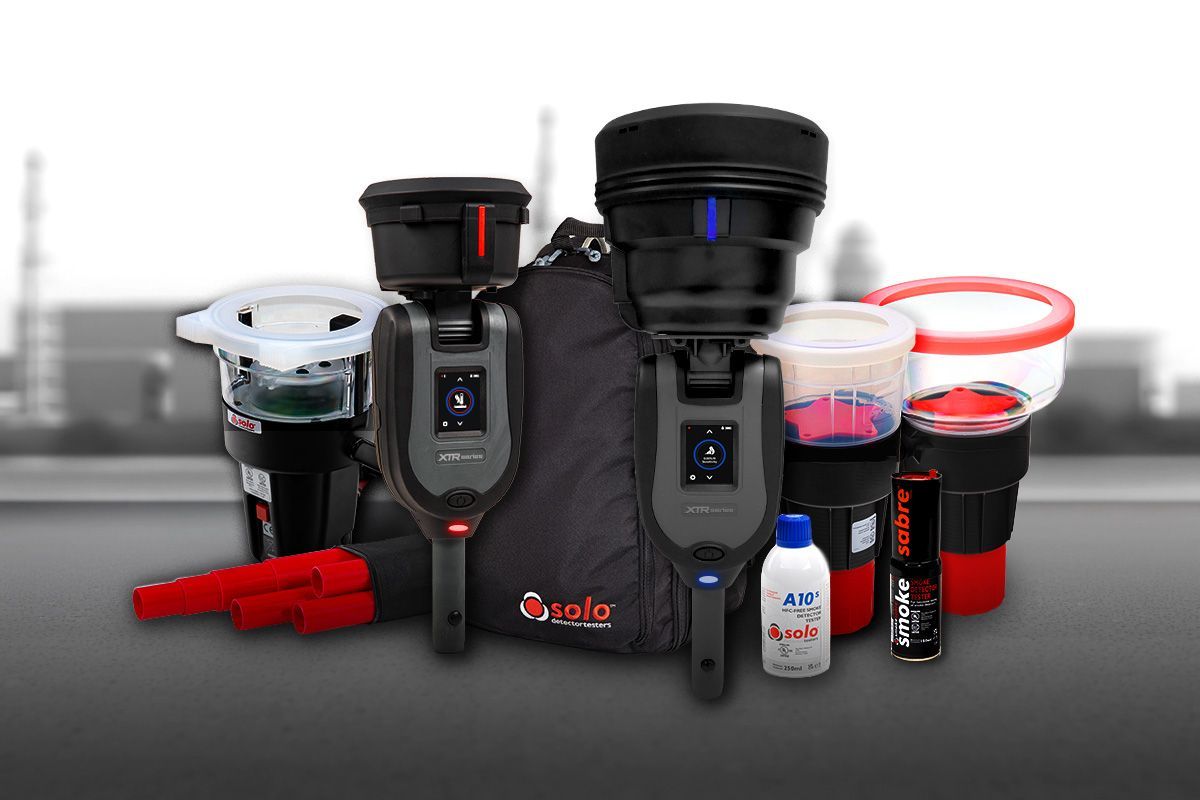
The introduction of the Solo range transformed this landscape.
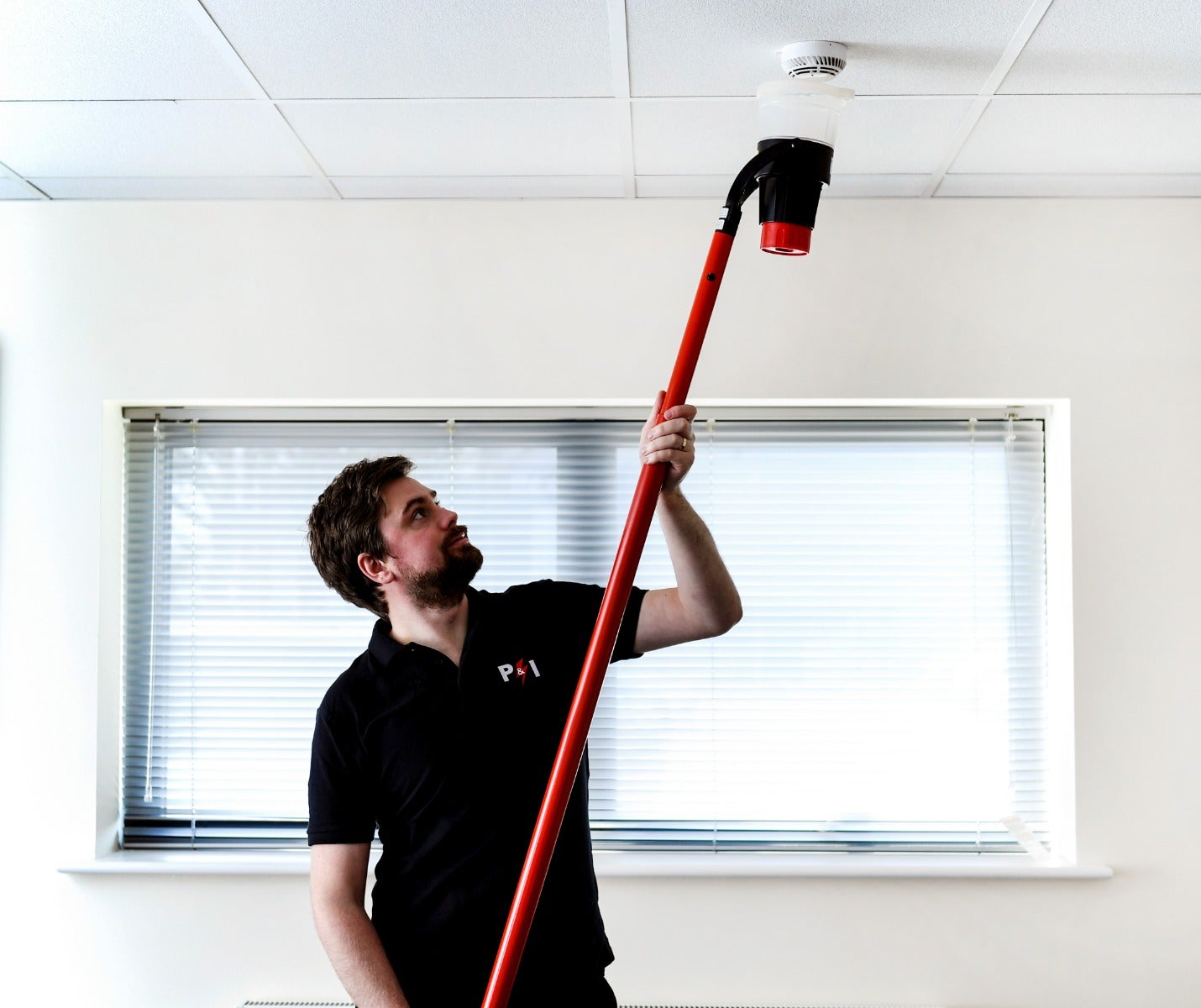
For the first time, technicians could test detectors safely from floor level using specialist poles and test equipment specifically designed for detector maintenance. What had previously required significant preparation and specialised access equipment became a routine maintenance task.
The impact extended far beyond productivity. By reducing reliance on working at height, testing became safer, more practical and more economically viable. More detectors could be tested more frequently, helping organisations meet their compliance obligations with less disruption and lower cost.
In many ways, this was the first major revolution in modern detector testing. Before testing could become better, it first had to become practical.
Making Testing Better
Once access barriers had been reduced, attention turned to the testing process itself.
For many years, aerosol-based testing was the industry norm. Whilst effective, it presented limitations in consistency, storage, transportation and workflow efficiency. Different detector types (smoke, heat) often required different testing tools, increasing complexity for technicians.
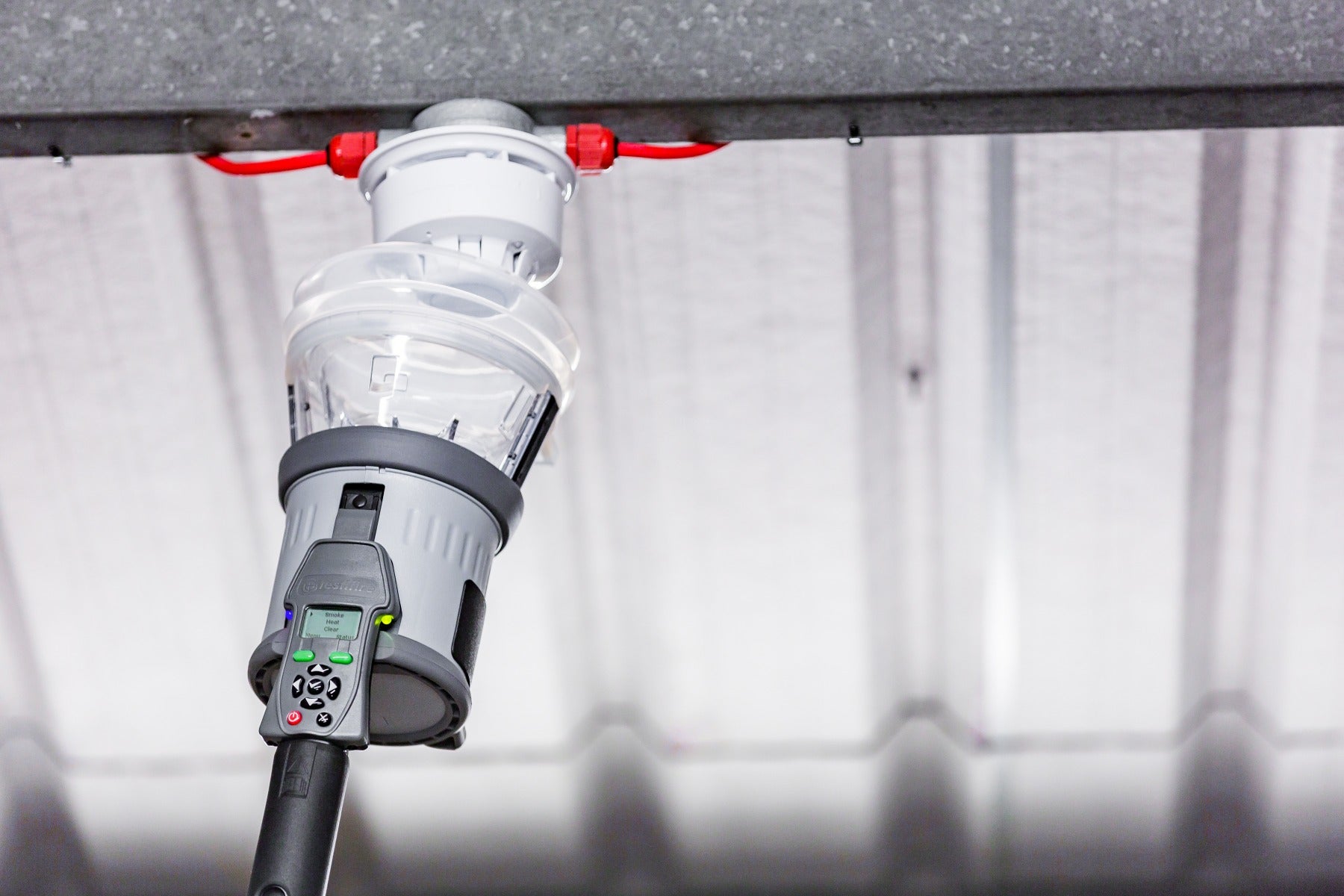
Detectortesters again challenged convention through innovation with Testifire, which pioneered multi-stimulus testing and accelerated the industry's transition towards electronic smoke generation.
Rather than carrying multiple testing devices, technicians could test smoke, heat and carbon monoxide detectors using a single platform. Patented electronic smoke generation technologies delivered improved repeatability and control, whilst successive innovations such as ceramic smoke generation and advanced heater algorithms further improved performance and reliability.
The result was not simply a better testing product.
It was a fundamentally better testing process.
Testing became faster, simpler and more consistent, helping customers keep pace with evolving detector technologies and compliance requirements.
Making Testing Smarter
Whilst functional testing confirms that a detector responds to an appropriate stimulus, it does not necessarily confirm that the detector is operating at its intended performance level.
A detector may activate whilst still experiencing contamination, ageing-related drift or changes in sensitivity.
More than thirty years ago, Detectortesters introduced TruTest, helping establish commercial smoke detector sensitivity testing and creating an entirely new category of detector maintenance.
The industry moved beyond asking:
"Does it work?"
and began asking:
"Is it working correctly?"
This represented a significant shift in thinking.
For the first time, detector performance could be measured and verified in the field. Sensitivity testing introduced a powerful new capability: performance verification.
Today, sensitivity testing has been made even easier, more convenient and faster with the introduction of XTR Axis. The principle remains as relevant as ever.
Knowing that a detector activates is important.
Knowing that it activates at the correct sensitivity threshold is better.
Making Compliance Visible
As testing methods evolved, another challenge emerged.
How do you prove that testing actually took place?
Historically, confirmation often relied on technician observation and manual record-keeping. As compliance requirements became more demanding, the industry increasingly required objective evidence that testing had been completed successfully.
Detectortesters responded by developing patented LED detection technologies, enabling testers to automatically recognise detector activation and provide clear confirmation of successful testing.
This innovation removed ambiguity from the testing process and provided greater confidence in the resulting compliance records.
It represented an important shift from simply conducting tests towards creating trusted evidence that testing had occurred.
Making Compliance Connected
The next stage of innovation extended beyond the test itself.
As regulatory requirements continue to evolve, organisations increasingly need data, traceability and digital records alongside physical testing activities.
DT Connect from Detectortesters now combines detector testing with digital compliance workflows, helping customers manage records faster and more efficiently, and providing greater visibility into testing activities.
While access tools improved how tests were performed, and proof-of-test technologies improved how tests were verified, connected platforms improved how compliance was managed.
The result is a continuing shift towards evidence-based maintenance supported by digital records and connected workflows.
The Next Chapter
For more than three decades, Detectortesters has focused on removing the barriers that make detector testing and compliance difficult. From making testing safer and more accessible with Solo, to introducing performance verification with TruTest, pioneering electronic smoke generation with Testifire, automating test execution through the XTR platform and connecting compliance workflows with DT Connect, each innovation has built upon the last.
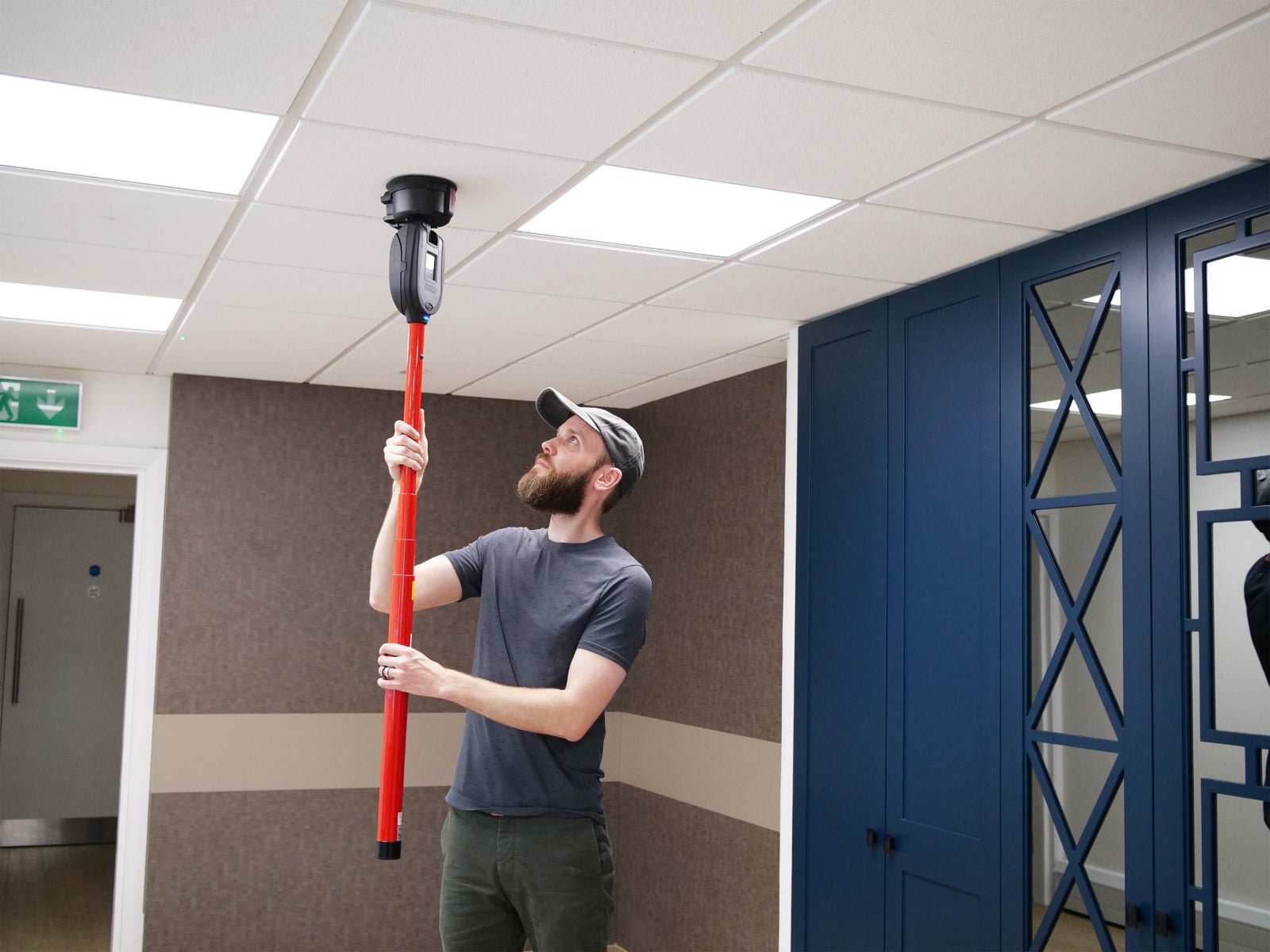
Today, XTR AXIS represents the convergence of those innovation streams. By combining sensitivity testing, electronic smoke generation and automated test execution in a single platform, XTR AXIS becomes the world's first automatic electronic smoke sensitivity tester.
As standards, customer expectations and technology continue to evolve, so too will the tools that support compliance. For more than thirty years, Detectortesters has helped make detector testing safer, faster, simpler and more reliable. The next chapter is already underway.
Colin Chapman - VP Engineering - Noventis Safety